



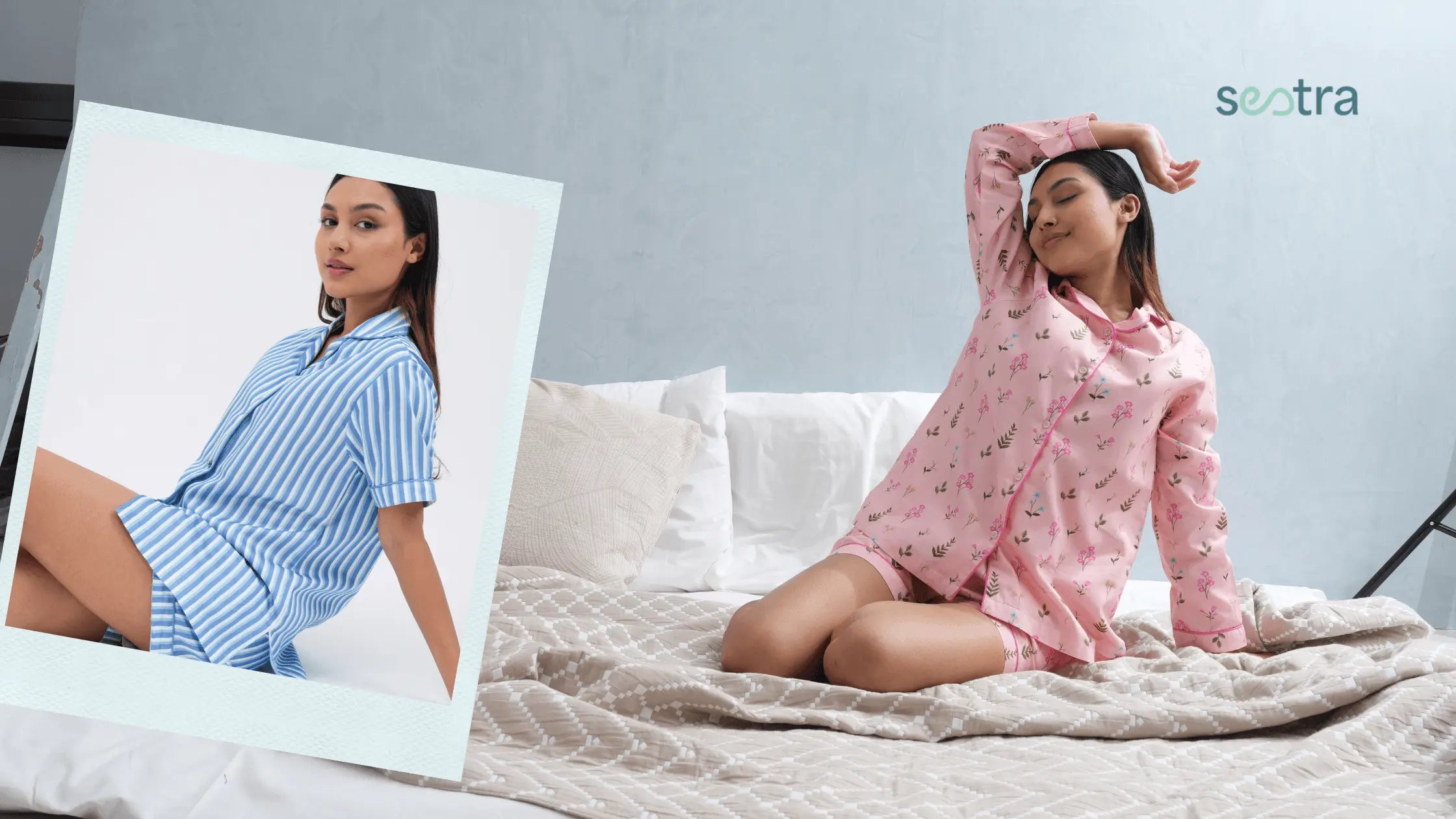
Why You're Waking Up Hot at Night (And What Your Nightwear Has to Do With It)
You wake up at 2 AM. The ceiling fan is on. The window might be open. Your partner next to you seems perfectly fine. And yet you're too hot - not feverish, not unwell, just that specific uncomfortable warmth that sits on your skin and won't let you go back to sleep quickly.
You kick off the blanket. You lie still for a while. Eventually you drift off again, only to wake up at 4 AM repeating the whole thing.
If this is familiar, you've probably accepted it as just how you sleep - a hot sleeper, a light sleeper, someone whose body just runs warm. Maybe you've tried a lighter blanket, or pointed the fan more directly at the bed. And these things help, to a degree.
But there's one variable almost nobody considers: what they're wearing.
Your womens nightwear is in direct contact with your skin for the entire night. It affects how heat moves away from your body, how moisture is handled when you warm up, and whether your body's natural cooling process can actually work. For many women who wake up hot regularly - particularly in India, where summer nights stay warm and humid long after the sun goes down - the nightwear is doing more harm than any other single factor.

How Your Body Temperature Works During Sleep
Before getting to nightwear, it helps to understand what your body is actually doing through the night - because once you understand this, the fabric and format questions answer themselves.
Your core body temperature naturally drops as you fall asleep. This drop is part of the sleep initiation process - it's one of the signals your body uses to shift from waking to sleeping mode. Through the night, your temperature continues to fluctuate in a predictable pattern, generally rising again in the hours before you wake.
This process is called thermoregulation, and it happens automatically - your body manages it without you having to think about it. The key word is automatically. Your body is designed to handle this on its own, and it's very good at it - unless something interferes.
Your nightwear can interfere.
When you wear fabric that traps heat against your skin rather than allowing it to dissipate, your body's thermoregulation has to work harder. The natural drop in core temperature that should happen as you fall asleep is slowed. The gradual rise in the early morning hours happens faster and more intensely. Your body can't vent heat efficiently, so it wakes you up - that's the hot-at-night feeling. It's not a malfunction. It's your body trying to regulate temperature the only way available to it when the fabric won't cooperate: by waking you up so you can do something about it.
For women in India, this is amplified by climate. Indian summer nights - especially in coastal cities with high humidity, or in cities where the temperature stays above 28 degrees well into the night - create a thermoregulation challenge that the wrong nightwear makes significantly worse.
What Your Nightwear Is Doing Wrong
There are four specific ways that womens nightwear can interfere with your body's temperature regulation through the night. If you're waking up hot regularly, at least one of these is likely the cause.
The fabric doesn't breathe
This is the most common problem and the most impactful one. Synthetic fabrics - polyester, nylon, synthetic satin, synthetic jersey - don't allow airflow. They sit against your skin and trap the warmth your body generates, with nowhere for it to go. In a comfortable room temperature this is manageable. In an Indian summer, with humidity adding another layer of difficulty, synthetic fabric nightwear creates a heat trap around your body that your thermoregulation cannot overcome without waking you.
The test is simple: if your night pyjamas for womens feel noticeably warmer after you've been lying in them for an hour than they did when you first put them on - the fabric isn't breathing. It's accumulating your body heat rather than releasing it.
The fabric clings when you warm up
Related to breathability but a distinct problem. Some fabrics - including synthetic satins and certain jersey cottons - develop a clinginess when they absorb warmth and moisture. They stick to the skin rather than allowing air to move between the fabric and your body. This clinging creates a secondary heat trap on top of the first one, and it's also just physically uncomfortable in a way that's hard to sleep through.
Good ladies nightwear set fabric should move away from your body as you warm up - draping rather than sticking. This is one of the specific reasons cotton satin works so well for warm-weather nightwear: its weave structure gives it a natural drape that maintains itself rather than collapsing into clinginess as body heat increases.
The format covers too much for the temperature
Even breathable fabric can contribute to overheating if the format means too much of your body is covered. Full-length pyjama trousers in the height of Indian summer trap heat around your legs - one of the body's major heat-generating areas during sleep. Your legs and feet are actually significant heat-exchange surfaces; keeping them covered on a night when your body is trying to cool down works against the process.
This is the core reason a top and shorts set nightwear is a more comfortable format for Indian summer than a top and pyjama set. It's not purely about feeling lighter - it's about giving your body's heat exchange more skin surface to work with.
The nightwear doesn't handle moisture
When your body warms up during sleep, it produces moisture - that's part of the cooling mechanism. If your nightwear doesn't absorb or wick that moisture away from the skin, it sits there - creating that specific damp, sticky, can't-get-comfortable feeling that's distinct from simply feeling hot. In humid Indian conditions where the air itself holds moisture, nightwear fabric that can handle moisture from both directions - absorbing from the skin, allowing evaporation outward - is the right answer.
Natural cotton fibres absorb moisture. Synthetic fibres don't - they push it back toward the skin. For anyone waking up hot and slightly damp in Indian summer, switching from a synthetic fabric to a cotton-based one often resolves both the temperature and the moisture problem in one change.
Why Indian Summers Make This Worse
The physics of sleeping hot in India are specific to the climate, and it's worth being direct about them.
In high humidity conditions - which describe most of India from June through September, and coastal cities like Mumbai and Chennai year-round - your body's primary cooling mechanism (sweating) becomes less efficient. Sweat cools you down through evaporation. When the surrounding air is already saturated with moisture, evaporation slows. Your body has to produce more sweat to achieve the same cooling effect, and nightwear that doesn't handle moisture accelerates the discomfort.
This means that fabric choice for womens nightwear in India isn't just a comfort question - it's a genuinely functional one. The difference between cotton satin and synthetic satin on a 30-degree, 80% humidity night in Mumbai or Chennai is not subtle. It's the difference between sleeping through the night and waking up at 2 AM feeling like you've been wrapped in cling film.
Dry heat cities like Delhi have a different version of the same problem. The temperatures are often higher, and while humidity is lower during summer (the monsoon brings it back), the sheer ambient heat makes fabric breathability equally critical. In Delhi summers, anything that traps heat is going to create a waking-up-hot problem regardless of how light the fabric feels when you put it on.
The Nightwear Fix: What Actually Works
The solution here is specific and practical. Here is what to change, in order of impact.
Switch to cotton satin
This is the single most impactful change. Cotton satin breathes like natural cotton, handles moisture by absorbing rather than repelling, and drapes away from the body rather than clinging as you warm up. For night pyjamas for womens in India - across seasons but especially in summer - cotton satin is the fabric that handles thermoregulation interference the least, which means your body's natural process can do its job.
Every set in Sestra's collection is made in cotton satin for exactly this reason. Not as a premium feature - as a functional requirement for nightwear that actually works in Indian conditions.
Switch to a shorts format for summer
If you're consistently waking up hot through summer, and you're currently sleeping in a full-length pyjama set, the format change may matter as much as the fabric change. A top and shorts set nightwear gives your body significantly more heat-exchange surface through the night. Combined with cotton satin's breathability, the improvement in how you sleep through warm nights is noticeable from the first night.
The concern most women raise about shorts nightwear is coverage in shared home spaces - whether a womens nightwear shorts set is appropriate when family members are present in the evening. In a properly designed set, this is not a problem. Sestra's shorts sets use the same built-in inner padding and coverage-first neckline construction as the full-length pyjama sets - so you can go bra-less anywhere in your home, at any hour, without the shorts format reducing your ease or confidence. The cooling benefit is real. The coverage compromise is not.
Check your waistband
This is a smaller point but relevant. A waistband that sits too tight across the abdomen creates pressure and restriction that can affect how comfortably your body regulates temperature through the night. For anyone who sleeps on their side especially, a tight waistband means you're adjusting position repeatedly and each adjustment is a partial waking. Look for a soft elasticated waistband in your ladies nightwear set that sits gently without cinching, whether in a pyjama or shorts format.
Consider when you change
This connects to the waking-up-hot problem in a way that surprises most women. If you change into your nightwear right before bed - still carrying the warmth and tension of the day - your body is starting the night's thermoregulation process from a higher baseline. If you change earlier, at 7 or 8 PM, your body has time to begin its natural cooldown before you actually try to sleep. Combined with fabric that supports rather than fights that process, changing earlier means you're already partway through the temperature drop by the time you get into bed.
Bra-less nightwear for women designed for shared spaces - like every set in Sestra's collection - makes this early change possible. You don't have to wait for privacy. You change when you get home, your body starts unwinding, and the night's sleep starts on better terms.
Other Reasons You Might Be Waking Up Hot
Nightwear is the most overlooked contributor to sleeping hot - but it's worth noting the others, so you can identify whether this is a one-variable problem or a combination.
Room temperature: Ceiling fans help but have limits. If your room temperature stays above 28 degrees through the night, even the best nightwear will only partially address the problem. Where possible, cross-ventilation - windows on opposite walls open simultaneously - can reduce room temperature more effectively than a fan alone.
Heavy blankets or quilts: India's winter conditioning sometimes means blankets stay on the bed well into summer. If your nightwear is right but you're still using a blanket more appropriate for February, the blanket is the problem. A light cotton sheet is sufficient for most Indian summer nights.
Hormonal fluctuations: Night sweats and waking up hot are recognised symptoms of hormonal changes - including those related to the menstrual cycle, perimenopause, and menopause. If you're experiencing this regularly and the nightwear and environment changes don't resolve it, a conversation with a doctor is the next step. This blog addresses the nightwear variable specifically; it doesn't replace medical advice for underlying hormonal causes.
Evening meals: A large, heavy meal close to bedtime raises your metabolic rate - which generates body heat - precisely when your body is trying to cool down for sleep. This is a lifestyle variable rather than a nightwear one, but it's worth noting as a contributing factor for women who find they wake up hot particularly after certain evenings.
Sestra's Collection for Cooler, Better Nights

Every set in Sestra's collection is built in cotton satin - the fabric that handles Indian climate conditions honestly - with bra-less construction that lets you change early and feel at ease anywhere in your home.
Night shorts sets for ladies - the right format for Indian summer and warm nights. Midnight Sky, Fairy Dust, Wine Down, Starry Dreams. Sizes XS to 3XL.
Pyjama sets for women - for cooler nights, air-conditioned rooms, and cooler months. Fairy Dust Lavender, Wine Down, Coral Cloud, Morning Dew. Sizes XS to 3XL.
Shop all womens nightwear sets - every format, every print, every solid together.
Stop waking up at 2 AM. Browse Sestra's full collection - night shorts sets for ladies, pyjama sets for women, and all ladies nightwear sets. Designed in India, for Indian women.
FAQ’s
Why do I wake up hot at night in India even with the fan on?
Waking up hot at night in India is often a fabric problem. Synthetic nightwear doesn't breathe and traps body heat against the skin - even with a fan, the fabric creates a localised heat environment your thermoregulation can't overcome. Switching to womens nightwear in cotton satin, which breathes and handles moisture naturally, resolves this for most women. A shorts format in summer also helps by giving your body more heat-exchange surface through the night.
Does nightwear fabric really affect how hot you sleep?
Yes - significantly. Fabric that doesn't breathe (synthetic materials) traps heat and repels moisture, forcing your body to work harder to regulate temperature. This is a major contributor to waking up hot at night. Night pyjamas for womens in natural cotton-based fabrics - especially cotton satin - interfere with thermoregulation far less than synthetic alternatives, which translates directly to more comfortable, less interrupted sleep.
Is a shorts nightwear set better than pyjamas for sleeping cool?
For Indian summer specifically, yes. A top and shorts set nightwear gives your body more skin surface for heat exchange through the night, which helps your body's natural cooling process work more efficiently. Combined with a breathable cotton satin fabric, a womens nightwear shorts set is the most comfortable format for sleeping through warm Indian nights.
Can bra-less nightwear help with sleeping hot?
Indirectly, yes. Bra-less nightwear for women designed with proper coverage allows you to change out of your daywear - including your bra - earlier in the evening. This gives your body more time to begin its natural temperature cooldown before sleep. Starting the night's thermoregulation process at 7 or 8 PM rather than right before bed means your body has already done significant cooling work by the time you get under the covers.
What is the best nightwear for women who sleep hot in India?
A top and shorts set nightwear in cotton satin. The shorts format allows better airflow across the legs - a major heat-generating area during sleep. Cotton satin breathes, absorbs moisture rather than repelling it, and drapes away from the skin rather than clinging as body temperature rises. For most Indian women sleeping hot through summer, this combination makes the most immediate and noticeable difference.
What else can I do to stop waking up hot at night?
Beyond nightwear, the most impactful changes are: improve room ventilation with cross-ventilation where possible, replace heavy blankets with a light cotton sheet for summer, avoid large meals close to bedtime, and change into your ladies nightwear set earlier in the evening to give your body more wind-down time before sleep. If waking up hot persists despite these changes, hormonal causes are worth discussing with a doctor.
Read more
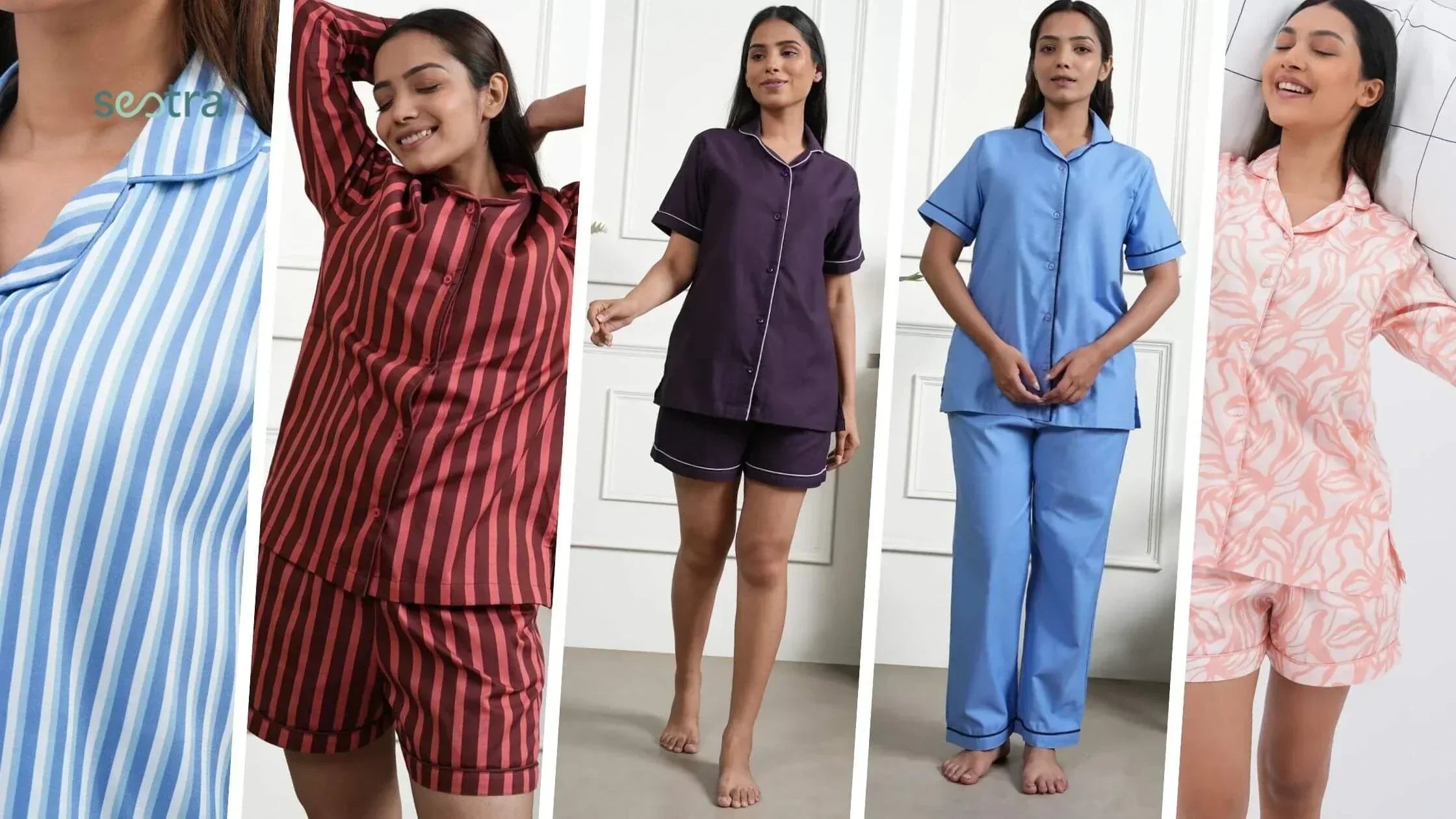
Buying nightwear online in India has never been easier. There are more options than ever, prices across every range, and delivery to almost every pin code. The problem isn't access. The problem is ...
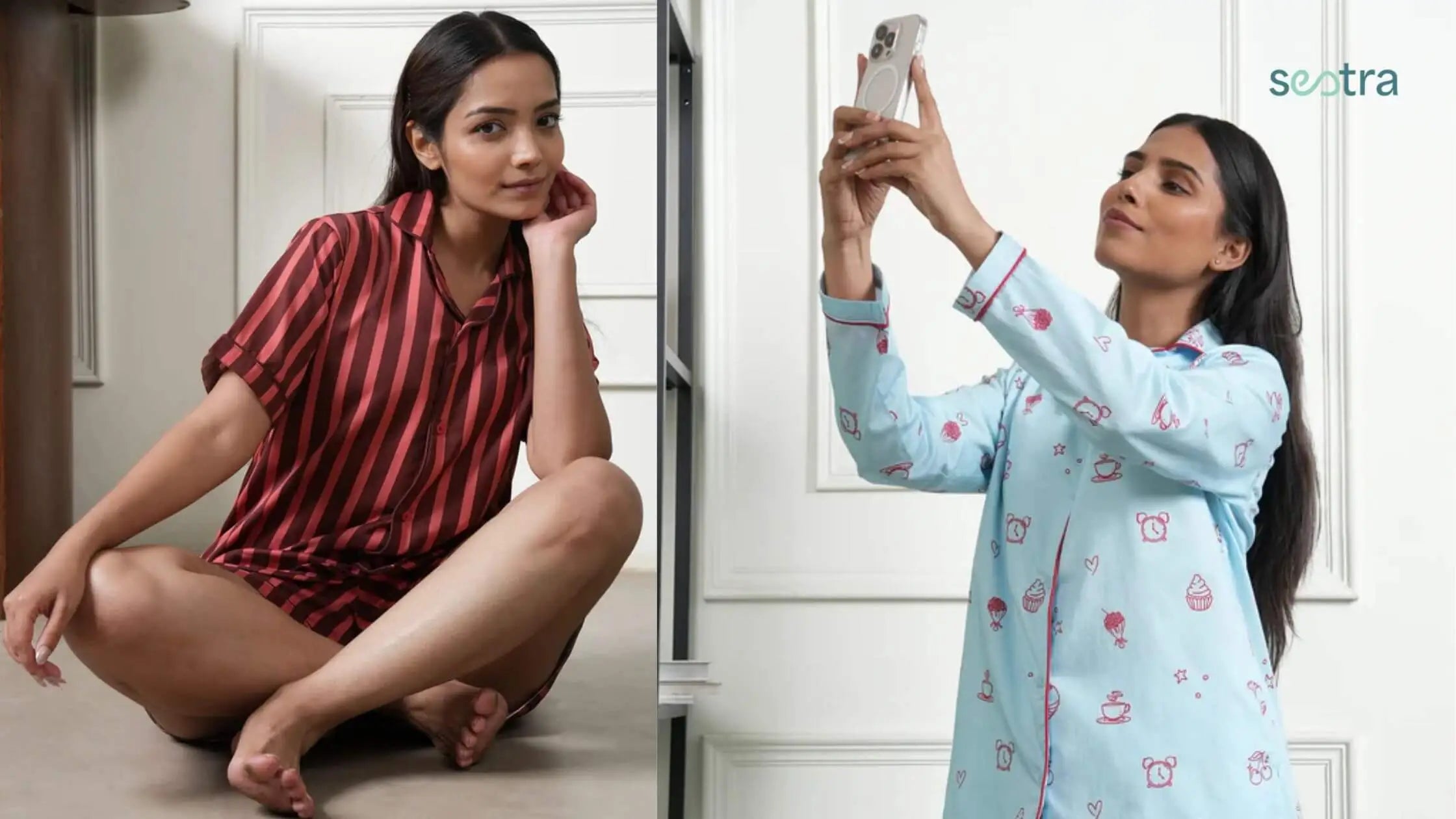
There's a particular kind of gift that doesn't make a loud entrance. It doesn't sit on a shelf or get photographed for an occasion. It gets used - quietly, every night, in the most private and pers...